
Home page » Private practice » Asian medicine » Chinese medicine
Asian wisdom in modern practice
The law of yin and yang is the natural order of the universe, the foundation of all things, the mother of all change, the root of life and death. To treat an illness, you have to find the root of the disharmony, which is always subject to the law of yin and yang.
Huangdi Neijing
Yin and yang represent two opposing forces in nature that are simultaneously related to each other. They are often understood as feminine or lunar and masculine or solar principles. All phenomena in nature, every structure and function of our body and every illness can be divided into yin and yang.
The dynamic balance of yin and yang guarantees health. A surplus is referred to as abundance, a deficiency as emptiness and is treated in opposite ways.
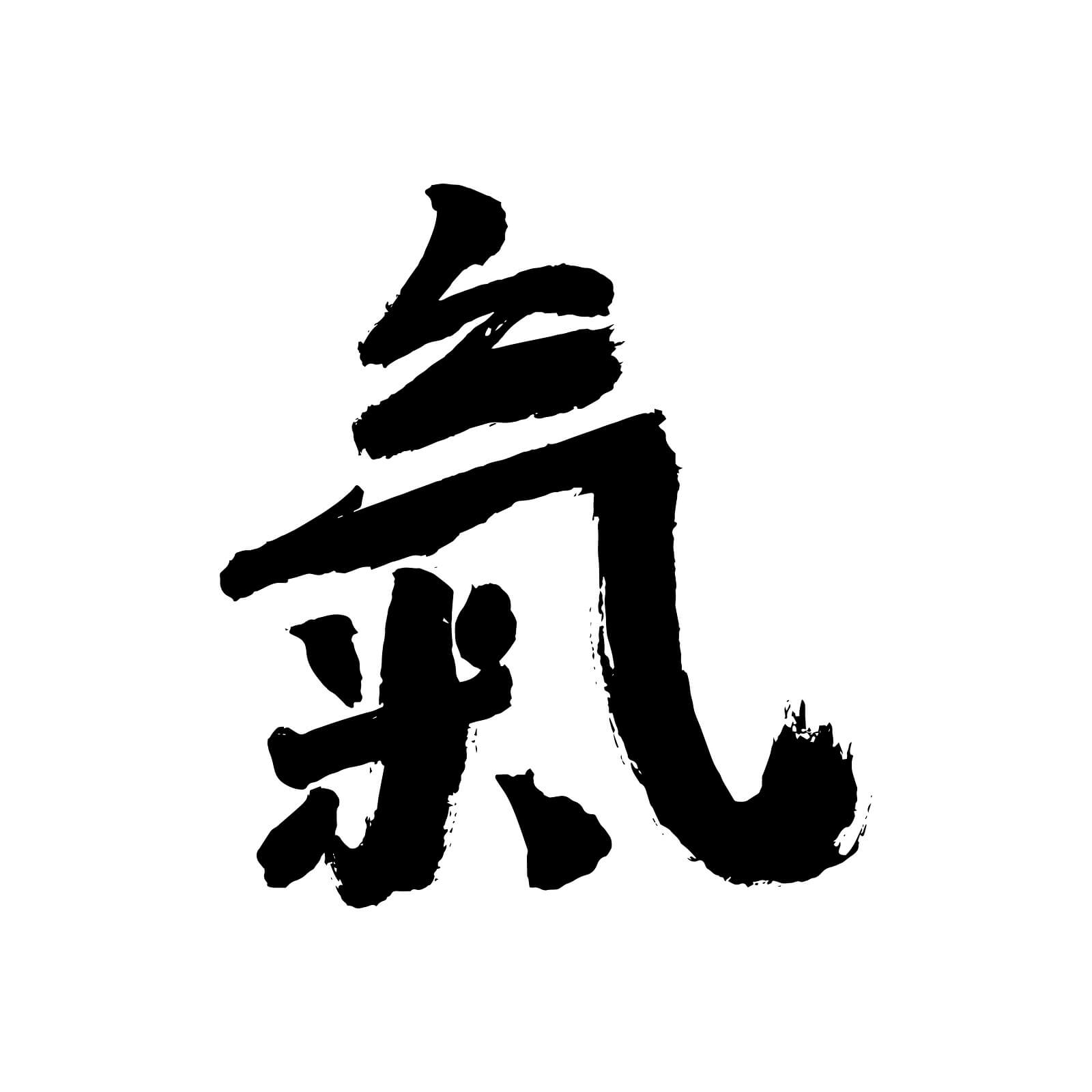
Qi is perhaps the most important term in Chinese medicine and is usually translated unspecifically as „life energy“. All substances in life are nothing other than manifestations of Qi in various degrees of substantiality. Qi is the essence that permeates and flows through everything.
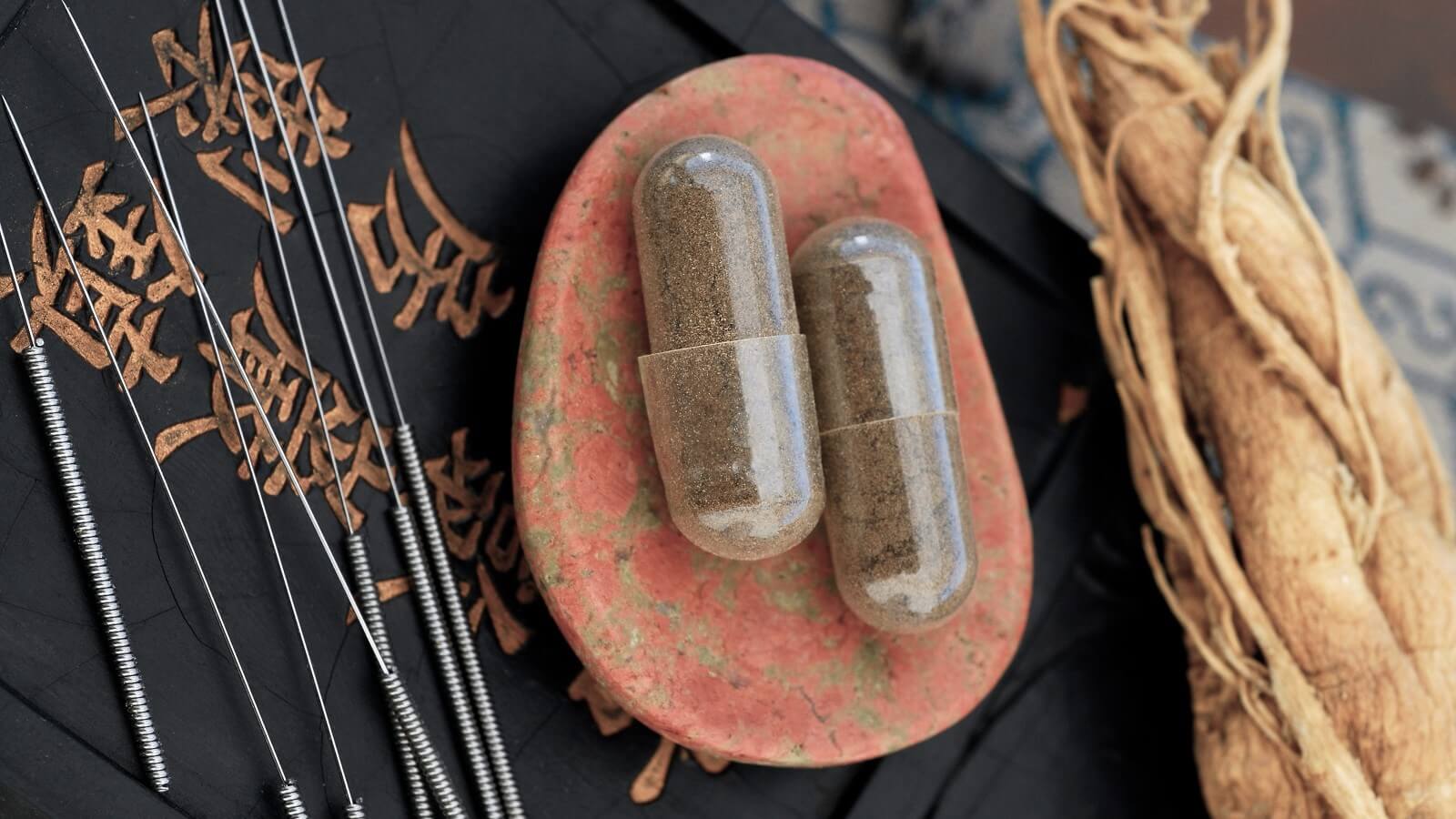
In the body, Qi moves in pathways known as meridians. There are force points on these pathways where Qi collects or moves - these are treated in acupuncture with needles, in moxibustion with heat and in manual therapy with pressure to restore the smooth flow.
Maintaining the functions of Qi in the human body is the central concern of TCM. To heal, Qi that has become deficient is strengthened, possible stagnation is resolved and the direction of movement is corrected.
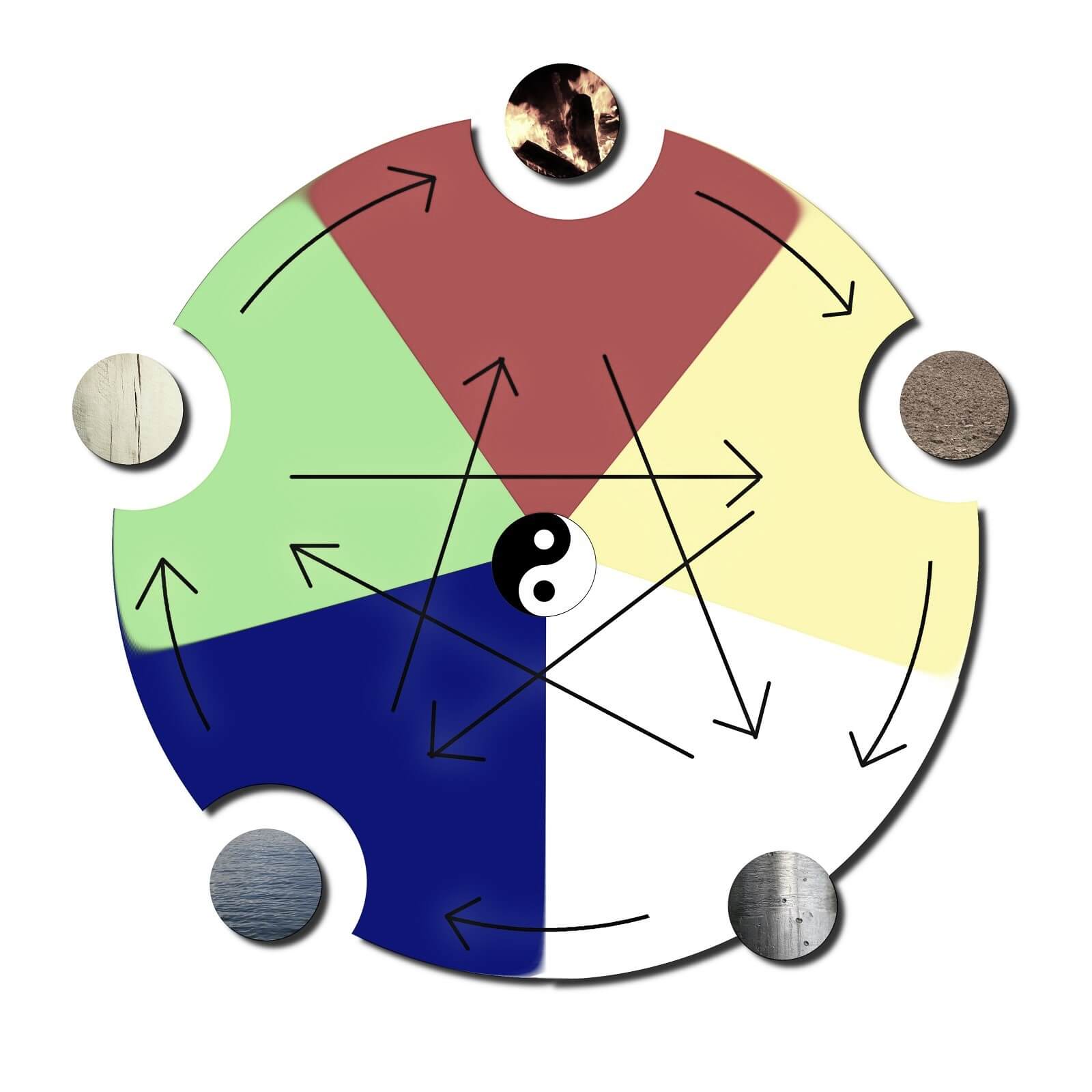
In contrast to Indian Ayurveda and ancient Greek medicine, Chinese medicine does not recognise elements in the structural sense, but instead distinguishes five qualities as the transformation phases of a cycle or, in Chinese terms, the „inherent ability of phenomena to change“.
These phases are called wood, fire, earth, metal and water. The seasons, climatic factors, colours, laws of nature, „organs“ and much more can be associated with them.
Each phase gives rise to the next phase, is „controlled“ by one phase and potentially jeopardised by another. This means that all phases are interconnected in a network.
The TCM therapist examines these connections in detail and restores the natural harmony.
The seven therapy pillars of TCM include
Would you like a non-binding preliminary discussion?