

Why we need a change in mentality
There is a strange mood in the country.
A perceived mix of uncertainty, worries about the future, tension and irritability.
The „political earthquake“ six weeks ago, when the US election was decided and the German traffic lights became a thing of the past, reinforced this long-standing trend.
What do we humans do when we feel threatened? We protect ourselves, build up supplies and consume less. Our trust in various authorities dwindles and we become more susceptible to dangerous ideologies.
Global politics is leading the way: it is bursting with mutual recriminations, disharmony, mistrust and threatening behaviour.
Many companies are reluctant to invest. There is a lack of stable political conditions and framework conditions, trade conflicts are looming, current expenditure is rising and income is stagnating or falling.
What effects does this vicious circle have on our mental and physical health? And what can we learn from ancient philosophies and health teachings to avoid being drawn into the maelstrom of increasing catastrophisation?
-
Fear leads to avoidance
Anxiety has been on the rise for years in all age groups.
And they have an effect on our feelings, perception and thought patterns.
Those affected feel insecure, helpless and at the mercy of others. Their attention is focussed on dangerous stimuli, resulting in tunnel vision with misperceptions. Physical symptoms are assessed as dangerous and unbearable and the supposed future is catastrophised.
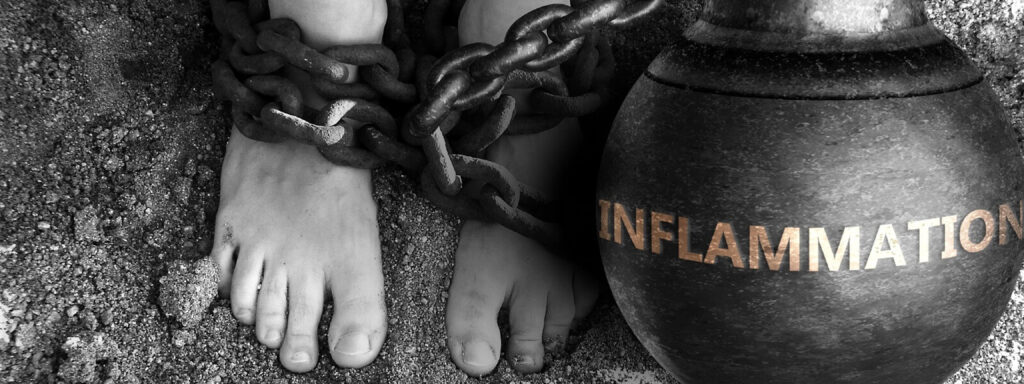
Our avoidance behaviour with increasing passivity and paralysis arises from this mixed situation. We avoid places, people and activities that can trigger fears and are therefore categorised as potentially dangerous. This in turn increasingly restricts our living space and the variety of opportunities it offers.
What feels like relief in the short term turns out to be a vicious circle in the medium and long term: repeated avoidance behaviour reinforces fears that lead to further avoidance. At some point, fear of fear arises. This is when we need professional help at the latest.
Persistent and recurring anxiety often has a physical impact. The increasing anxiety and tension leads to complaints such as sleep disorders, high blood pressure and palpitations, shortness of breath, dizziness, trembling, pain and declining cognitive performance. All these symptoms and our fight against them take an enormous amount of energy.
-
Who and what is important?
To prevent this from happening, we should connect with the most important things in our lives every day: close people and values in the sense of personal qualities that are close to our hearts.
- What do I want my life to stand for?
- What qualities do I want to develop?
- What skills do I want to realise and pass on?
If we orientate our actions accordingly, happiness, trust and confidence arise - even if the world around us is going crazy.
-
What can I change?
In my practice, I like to ask this central question at the end of an initial consultation:
What do you want as a therapeutic goal and result of our work?
Frequent answers are:
- I would like to have more energy.
- I want to feel balanced again.
- I want to be free of complaints.
These desires are completely normal, we all have them.
The problem is that we usually cannot influence them directly!
Our inner experience in the form of thoughts, feelings, memories and sensations cannot be directly influenced. There is no switch against restlessness, exhaustion or self-doubt.
What we can control at all times is our external behaviour. And if this is in harmony with our values and needs, it has a salutogenic effect - and therefore promotes mental and physical health.
Being happy means much more than simply feeling good. It means leading a fulfilling and meaningful life. Being in touch with yourself, nature and all living beings. Helping others.
Always ask yourself the question: What can I change and influence? Stop struggling and fighting against external and internal conditions that you cannot control.
Instead, focus your full attention on changing your behaviour in the areas where action is needed. Perhaps your diet, exercise, breathing, sleeping habits or time management? Or your private and professional reorientation?
This fundamental mindshift changes everything.
-
Enterprise instead of omission
An entrepreneur runs a company in order to do something. And not to refrain from doing something.
Even if the entrepreneurial gene has been weakening for a long time, especially in Germany, and security is considered more important than growth, we should question our current behaviour in light of the current challenges.
A well-known politician recently put it bluntly:
„For years, Germany imported cheaply, exported expensively and the Americans were responsible for its security. That's all over now.“
We have to learn to give more than just demand. To see larger contexts than just our own small „reality“. All Asian philosophies from India to Japan say that self-centredness is the source of suffering.
If we want to slow down climate change, reduce global poverty and make the world a more peaceful place, we have to pay a certain price. And make our own personal contribution.
Everything is interconnected. Our health is not created by taking a medication or a single therapeutic measure. It comes from continuous salutogenic behaviour in body and mind.
-
Politics and business are important, they create the basis for prosperity.
However, our own thoughts and actions are even more important. This gives rise to mental and physical well-being. And from inner peace comes outer peace.
Over the next three months, let us therefore work more on our change of mentality than just a change of government.
- From omission to enterprise.
- From avoidance to proactive action.
- From purely strategic reactions to value-led action.
If that happens, the name of the new Federal Chancellor will be of secondary importance.